
What Are Kenari Nuts?
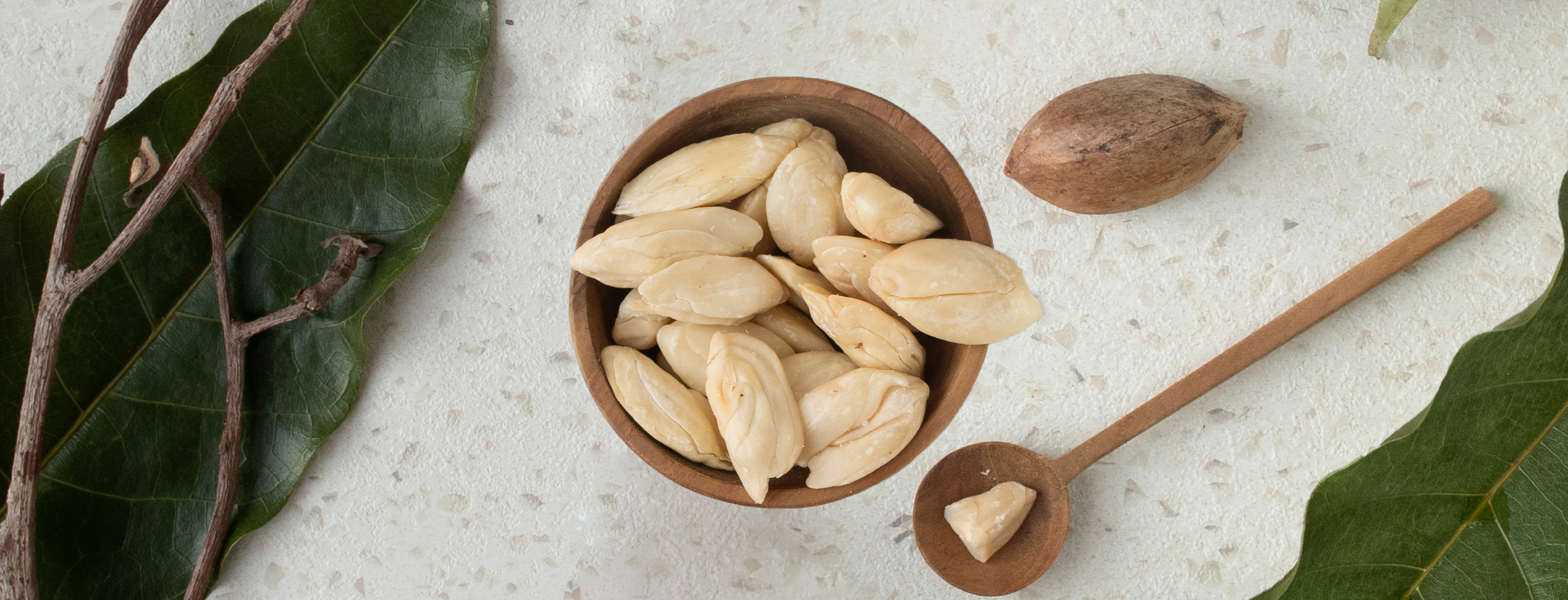
Kenari Nuts, a distinctive forest nut traditionally harvested in Eastern Indonesia.
A distinctive forest nut from Eastern Indonesia
Kenari, also known as the Kenari nut, is an Indonesian forest nut associated with Canarium indicum L., synonymous with Canarium amboinense Hoch. The name “Kenari” is used in Indonesia and is also commonly used in English when referring to this distinctive nut from Eastern Indonesia.
Kenari has long been known and enjoyed by local communities in the region. Today, this Indonesian forest nut is being discovered more widely for its distinctive creamy, buttery character, nutritional composition and potential as a versatile food ingredient.
In this guide, we explain what Kenari is, its scientific name, where Kenari comes from, how the fruit becomes an edible kernel, what Kenari tastes like, its nutritional characteristics, and how it can be used as a food ingredient.
The Name Kenari and Canarium
The name Canarium is the Latinized botanical name derived from kenari, the Indonesian name for the tree and its edible nut.
Canarium is a genus that includes several different species. This can sometimes lead to confusion between different Canarium nuts.
Kenari and Pili are not the same nut. Kenari is associated with Canarium indicum L., synonymous with Canarium amboinense Hoch., while Pili is Canarium ovatum. Although they belong to the same genus, they are different species and different nuts.
What Is Kenari in English?
In English, the Indonesian word “Kenari” is commonly used to refer to the Kenari nut. You may also encounter the terms “Kenari nut” or “Indonesian Kenari” when looking for information about this distinctive forest nut.
Unlike some better-known nuts, Kenari is not generally translated into the name of another familiar nut. The name Kenari itself is increasingly used when referring to the nut and its food products.
A Nut from the Forests of Eastern Indonesia
Kenari trees grow naturally in the forests of Eastern Indonesia. The nut has traditionally been harvested by local families using knowledge passed down through generations.
Unlike many commercially cultivated nuts, Kenari is closely connected to naturally occurring forest resources.
This relationship between forest, food and people is an important part of the Kenari story.
From Kenari Fruit to Kernel
Kenari begins as a fruit on the tree. After harvest, the fruit goes through several stages before the edible kernel is obtained.
The progression can be understood as:
Kenari Fruit → Kenari In Shell → Kenari In Testa → Kenari Nut
Drying, cracking and careful post-harvest handling are important steps in preparing the kernel.
The edible kernel has a naturally creamy to light-brown appearance, with a soft texture and a distinctive buttery character.
Creamy, Buttery and Distinctive
One of the characteristics that makes Kenari interesting is its sensory profile.
Kenari kernels have a naturally creamy, buttery taste and soft texture, making them enjoyable on their own while also allowing them to work across sweet and savory applications.
This versatility opens possibilities beyond snacking, including bakery, confectionery, spreads, nut-based products and other foods.
Naturally Nutrient-Rich
Kenari has a naturally rich nutritional composition, including protein, fats, amino acids and minerals such as magnesium.
Its nutritional profile is one of the reasons Kenari has attracted interest as an underutilized food resource. The nutritional composition of Kenari can vary according to the product, origin and analytical method. For a closer look at the nutritional composition of commercial dried Kenari Nuts and what our laboratory testing shows, read our Kenari nutrition and laboratory analysis → .
More Than a Nut
Kenari is more than the edible kernel. Its story is connected to the forests of Eastern Indonesia and to the people who have traditionally harvested and used it.
For Kawanasi, developing greater value around Kenari means creating a connection between a distinctive food ingredient, local livelihoods and the forests where it grows.
This connection is at the heart of #SignifiKenari.
From Eastern Indonesia to the World
For much of its history, Kenari was primarily known within the regions where it naturally grows and is traditionally consumed.
Kawanasi has worked to develop Kenari beyond its place of origin through sourcing, post-harvest handling, quality, certification, product development and international market development.
Kenari's journey from an underutilized Indonesian forest nut toward wider international recognition is still developing, with new work across sourcing, quality, product development and international markets.
Explore East Forest Kenari Nuts
Discover the Kenari developed by Kawanasi from Eastern Indonesia, including its characteristics, certifications, applications and international market development.
Interested in Kenari for your market or product?
If you are a food manufacturer, product developer, distributor, retailer or other food business interested in working with Kenari, explore how Kawanasi can support your project.
Explore More About Kenari
Kenari Nuts
Learn more about Kenari, its origins, characteristics and journey from Eastern Indonesia to the world.
Explore Kenari Nuts →
Kenari Knowledge
Explore more evergreen information about Kenari.
Explore Kenari Knowledge →
#SignifiKenari
Discover why Kenari matters to people, forests and the future.
Explore #SignifiKenari →