
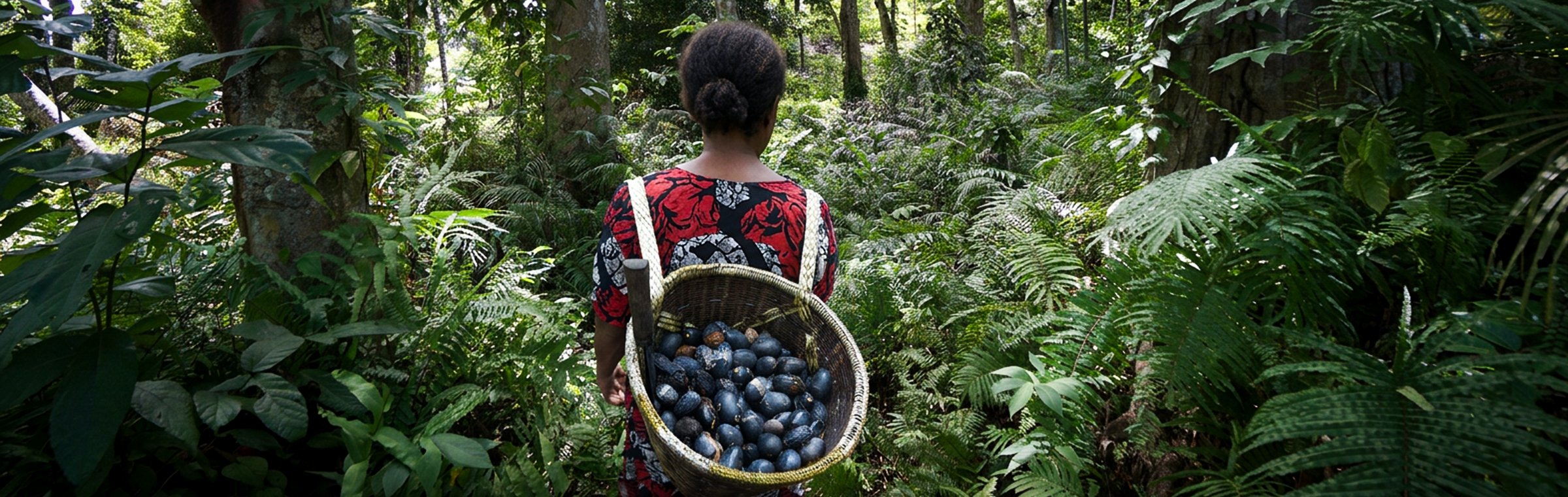
Local woman carrying freshly harvested Kenari fruit in an Eastern Indonesian forest — East Forest Kenari Nuts (Kawanasi)
Kenari fruit, nut in shell, nut in testa and Kenari kernel — East Forest Kenari Nuts (Kawanasi)

Kenari Fruit → Kenari In Shell → Kenari In Testa → Kenari Nut

Kenari Nuts

INDONESIA’s BEST-KEPT SECRET NUT

Kenari is the Indonesian and English name for Canarium indicum L., synonymous with Canarium amboinense Hoch., a distinctive forest nut native to Eastern Indonesia.

The name Canarium is the Latinized botanical name derived from “Kenari,” the Indonesian name for the tree and its edible nut. The genus includes several different species, which can sometimes lead to confusion between different Canarium nuts.

Pili Nut (Canarium ovatum) is a different species and a different nut. Although Pili and Kenari belong to the same Canarium genus, they are not the same nut.

Long enjoyed by local communities in the region, this little-known Kenari Nut has a naturally creamy, buttery character and a nutritional profile worth discovering.
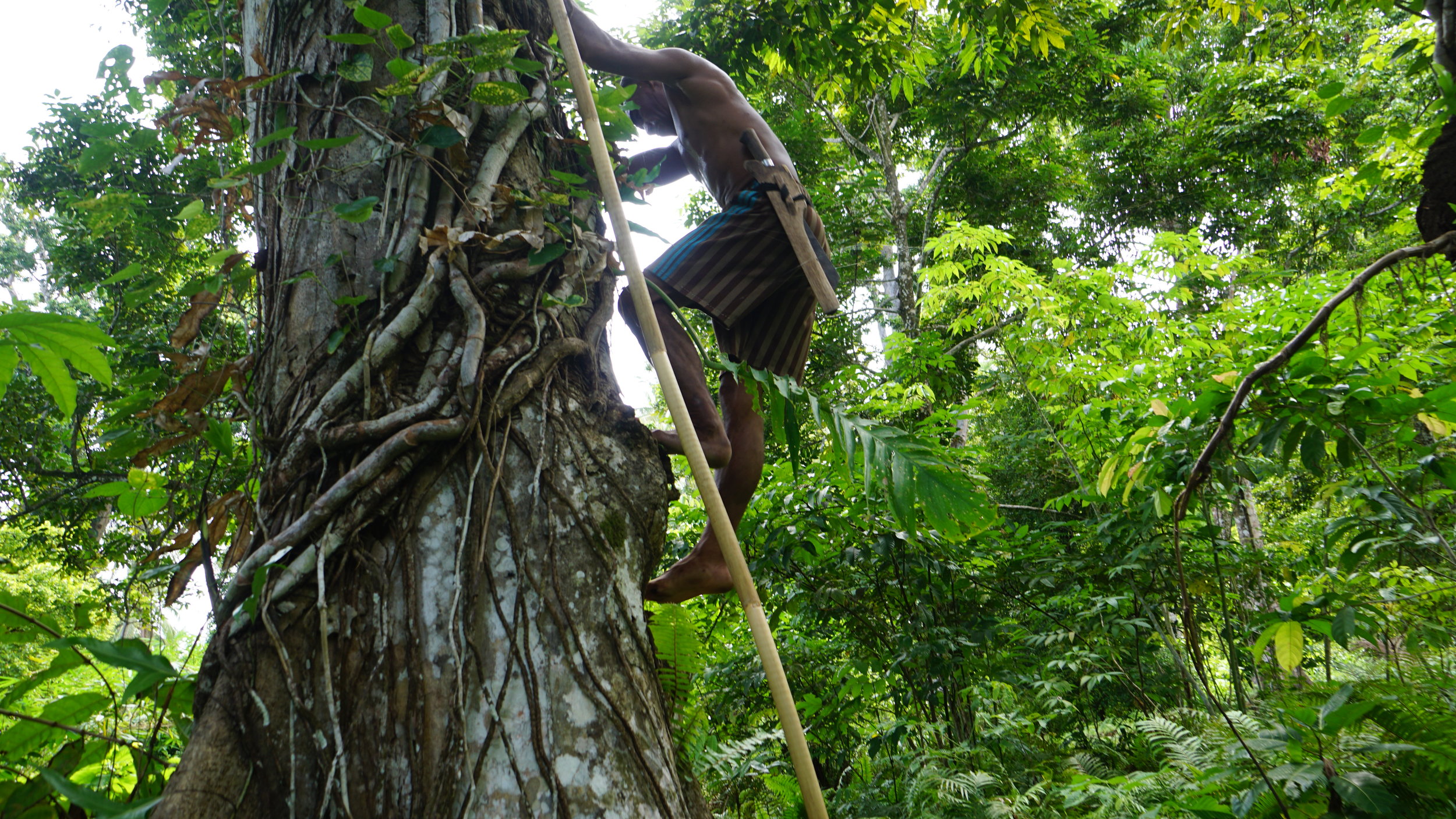
 
 
Local harvester climbing a wild Kenari tree in Eastern Indonesia — East Forest Kenari Nuts (Kawanasi)

Wild Harvested by the locals

The FOREST

FROM THE FORESTS OF EASTERN INDONESIA

Long before Kenari reached the shelves, it grew naturally in the forests of Eastern Indonesia. In the Spice Island Region and surrounding islands, Kenari trees have been part of the landscape and one of the local food sources for generations.

Kenari trees grow naturally in the fertile, mineral-rich volcanic soils of Eastern Indonesia, where forest, climate and geology come together to shape their environment.

A mature Kenari tree can become a remarkable forest tree, developing a broad canopy and reaching heights of up to 30–40 meters. Its fruit provides food for wildlife, its nuts provide food for local communities, while the tree remains part of the living forest around it.

This is what we mean when we call Kenari a forest nut.

30–40 M
Tree height

35+ YEARS
Tree age

FERTILE SOIL
Grows in mineral-rich soils

WILD HARVESTED
From naturally occurring trees


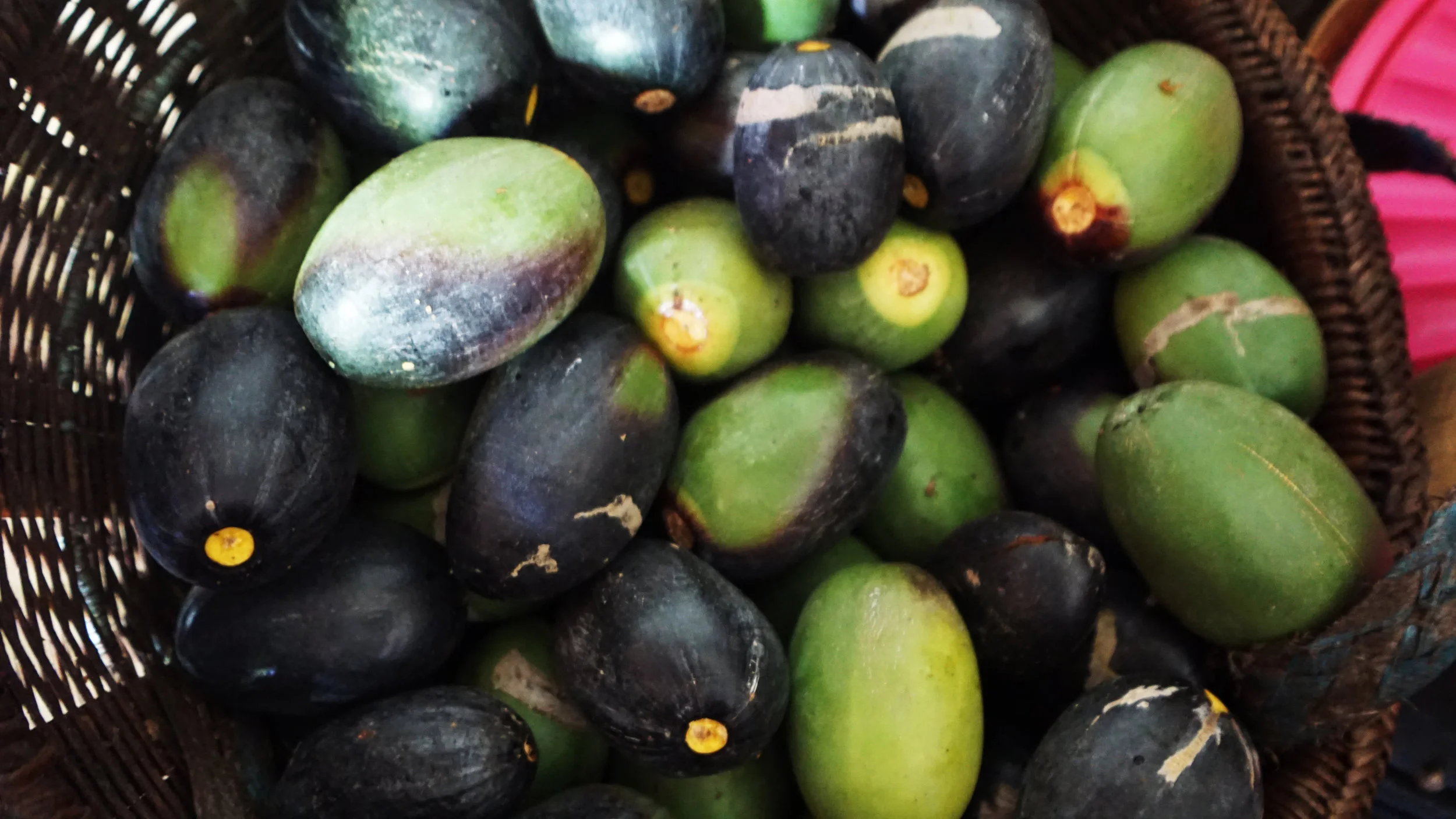
Freshly harvested Kenari fruits (Canarium indicum) from Eastern Indonesia.

Kenari fruits freshly harvested from the forest of Eastern Indonesia

FROM FRUIT TO KERNEL

THE NUT YOU DON'T SEE AT FIRST

What arrives to you as a pale, buttery kernel begins quite differently. Kenari starts as a fruit, with several layers protecting the part we eventually eat.

The outer fruit is removed, the hard shell is opened, and the testa (soft skin) is carefully separated to reveal the kernel (nut) inside. Each stage matters in preserving the quality of the finished nut.

From wild fruit to finished nut, every step shapes the Kenari you eventually taste.

For technical information about Kenari processing, quality specifications and post-harvest handling, please send us an inquiry → 


Ready-to-eat Kenari Nuts — East Forest Kenari Nuts (Kawanasi)

A bowl of our ready-to-eat Kenari Nuts

CREAMY. BUTTERY. DISTINCTIVE.

MORE THAN JUST A GREAT-TASTING NUT

Kenari has a naturally creamy to light-brown appearance, a soft texture and a rich, buttery taste. It is distinctive enough to stand on its own, yet familiar enough to make you wonder why you haven't encountered it before.

Our laboratory analysis, conducted by an ISO/IEC 17025-accredited laboratory, revealed that Kenari is naturally rich in magnesium, along with protein, healthy fats (including omega-3), amino acids and other minerals (Phosphorus, Iron, Potassium and Manganese). 

Its nutritional profile is one of the characteristics that makes Kenari especially interesting as a food and ingredient: snacks, muesli, salads, plant-based milk, ice cream, nut butter, bakery, pesto, curry paste, and there is much more to explore.

Explore Kenari's nutritional profile and what independent laboratory testing shows → 

Explore more what makes Kenari different from other nuts → 

For nutritional data, laboratory results and product specifications for commercial or formulation purposes, please send us an inquiry → 


RECOGNITION

FROM EASTERN INDONESIA TO THE WORLD

Kenari is making its way from the forests of Eastern Indonesia to markets around the world.

In 2023, dried Kenari nuts (Canarium indicum L., syn. Canarium amboinense Hochr.) were authorized for placement on the European Union market as a traditional food from a third country, following a notification submitted by Kawanasi Sehat Dasacatur, PT. Kawanasi initiated the process in 2020 to establish a pathway for Kenari to enter the European food market.

This authorization establishes kenari nuts as one of the newest types of tree nuts approved in the European Union

Today, Kenari is also marketed in Indonesia and other international markets, as more consumers and businesses discover its distinctive character and possibilities.

For businesses in interested in sourcing Kenari, developing Kenari-based products or exploring ingredient applications, explore Kenari for business →


#SIGNIFIKENARI

WHY KENARI MATTERS

Kenari is more than a nut. It connects people, forests, food and the future of Eastern Indonesia.

That's why Kawanasi created #SignifiKenari, an initiative to highlight the significance of Kenari for people, forests, nutrition and the future.

✓ PEOPLE

Creating value with communities who have known Kenari for generations.

✓ FORESTS

Recognizing the role of Kenari trees within the natural forest ecosystem.

✓ nutrition

Discovering nutritious foods beyond the familiar. Kenari is part of wider food biodiversity.

✓ FOR THE FUTURE

Opening new possibilities for an underutilized Indonesian non-timber forest product: as future ingredients and beyond, including as nature-based solutions for climate.

MAKE KENARI SIGNIFICANT.

#SignifiKenari is Kawanasi's invitation to look beyond the nut, to its people, its forests, its nutritional potential and the possibilities it holds for the future. Discover #SignifiKenari →


KENARI NUTS. FROM INDONESIA'S FORESTS, FOR THE WORLD.

DISCOVER THE NUT. UNDERSTAND ITS VALUE. EXPLORE ITS POSSIBILITIES.